How to Clean & Care for Braag Engineered Vinyl Flooring: Prevent Scratches, Stains & UV Fading
- William
- Jul 7
- 5 min read
Clean & Care for Braag Flooring:Key Takeaways
Factory-applied ceramic bead UV coating delivers built-in scratch and fade resistance with proper routine care
Simple daily and weekly cleaning requires no harsh chemicals, wax or polish
Targeted stain solutions for food, paint, pet messes and ink using common household products
Practical prevention rules for furniture, footwear and sun exposure extend floor life by decades
Guidelines apply to all Braag lines: Engineered Vinyl Click (LSPC), Engineered Vinyl Plank (LVP) and Engineered Vinyl Tile (LVT)
Braag engineered vinyl floors are chosen by Dutch homeowners for their waterproof durability and realistic finish, but incorrect cleaning and lack of protective care will gradually dull the surface, create permanent scratches and speed up UV discoloration over time.
This complete care guide covers daily cleaning routines, step-by-step stain removal, scratch and fade prevention, and line-specific maintenance rules tailored to each Braag collection. Follow these guidelines to keep your floor looking new through the full 30-year residential warranty period.

1. Standard Daily & Weekly Cleaning Routine
All Braag engineered vinyl floors feature a sealed ultra-matte ceramic bead top layer. They only require gentle, low-effort care – abrasive tools and strong corrosive cleaners will damage the protective finish.
Daily Care (5 minutes)
Sweep or vacuum daily to remove grit, sand and loose dirt
Vacuum rule: Turn off the beater bar and use the hard-floor setting only. Rotating bristles will leave micro-scratches on the wear layer.
Place walk-off mats on both sides of entry doors to block road salt, sand and mud from being tracked indoors. Avoid latex or rubber-backed mats, as they can cause permanent discoloration.
Wipe up liquid spills immediately. Juice, rainwater and pet accidents will not penetrate the non-porous surface if cleaned promptly.
Weekly Deep Cleaning
Use only a soft microfiber mop head. Rough scrub brushes will scratch the ceramic bead coating.
Dilute a neutral, water-based floor cleaner in lukewarm water.
Wring the mop fully to avoid excess standing water – never flood the floor.
Wipe in small sections, and buff away any remaining dampness to prevent water marks.
Cleaning Supplies & Tools Reference
Category | Safe to Use | Strictly Forbidden |
Tools | Microfiber broom, microfiber mop, vacuum with beater bar turned off | Vacuum with active beater bar, steel wool, hard scrub pads, rotary scrubbers with coarse brushes |
Cleaners | Neutral water-based floor cleaner, lukewarm clean water | Bleach, vinegar, ammonia, wax, polish, abrasive scouring powders, oil-based soaps, strong solvent cleaners |
Forbidden products will wear down the UV topcoat, cause permanent dullness or lead to chemical discoloration.
2. Step-by-Step Stain Removal Guide
All solutions below use mild household materials that are safe for Braag's ceramic bead UV surface. Always test on an inconspicuous spot first.
Acidic stains (wine, fruit juice, ketchup) — Mix baking soda and water into a thin paste. Rub the stain gently with a microfiber cloth, then follow with a normal mop to remove all residue.
Ink, crayon, paint and cosmetic marks — Dab a small amount of rubbing alcohol onto a soft cloth. Lightly wipe the stained area – do not scrub hard. Mop the area with clean water afterward to remove alcohol residue.
Pet accidents and organic messes — Clean up immediately with a damp microfiber cloth and neutral cleaner. Left unattended, urine can cause faint yellow discoloration over months of exposure.
Dried glue and adhesive residue — Use a vinyl-safe adhesive remover. Never scrape with sharp blades, as they will cut through the wear layer.
3. Core Tips to Prevent Scratches
Most scratches come from grit, furniture and pet claws. Follow these rules to keep your floor intact for decades.
Apply thick felt pads to the bottom of all furniture legs, chairs, toy cabinets and storage units.
Use wide, non-staining soft casters (minimum 50mm diameter) on office chairs and rolling furniture.
Never drag heavy sofas, refrigerators or storage boxes directly across the floor. Lay protective hardboard sheets when moving large or heavy items.
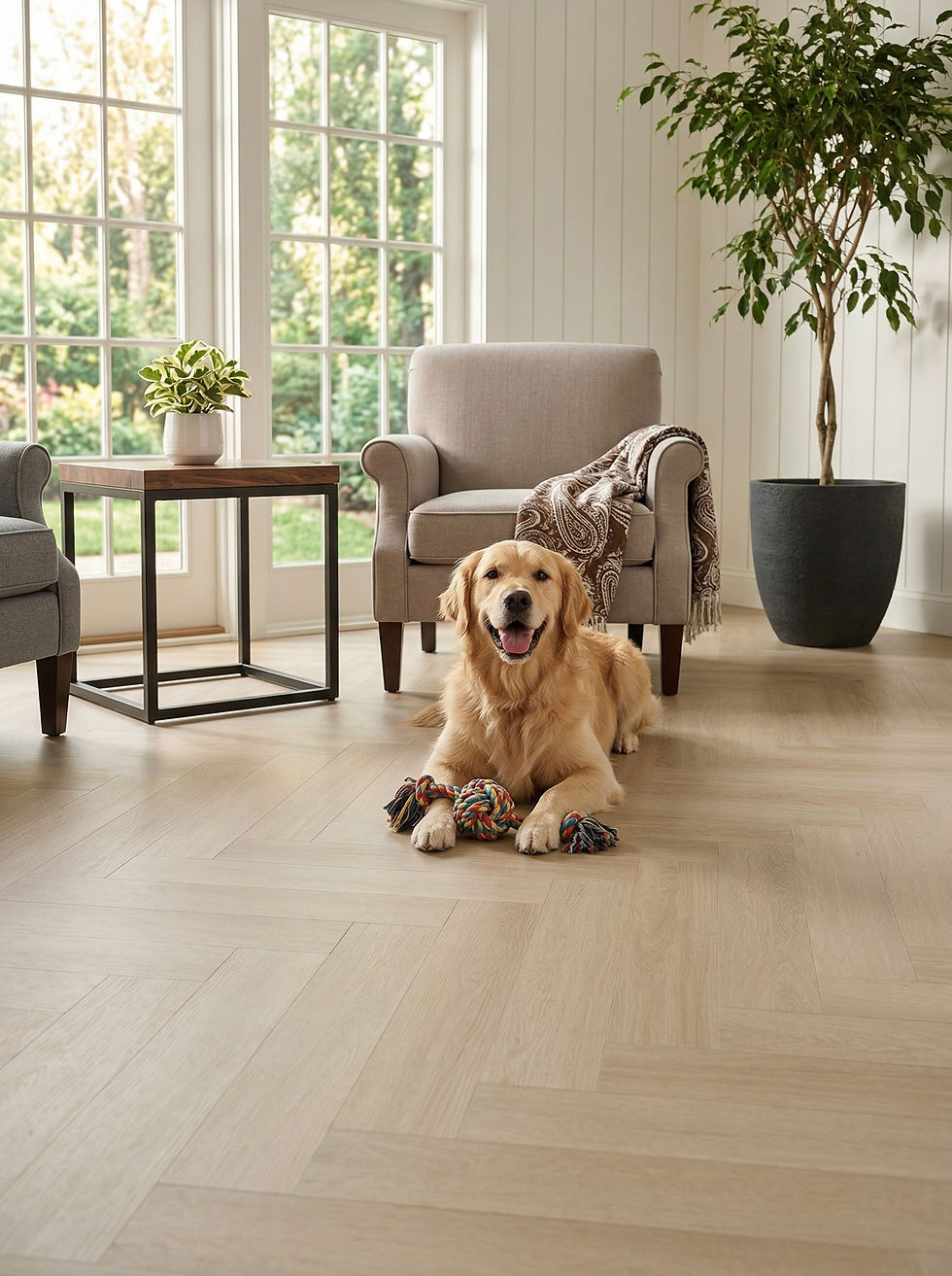
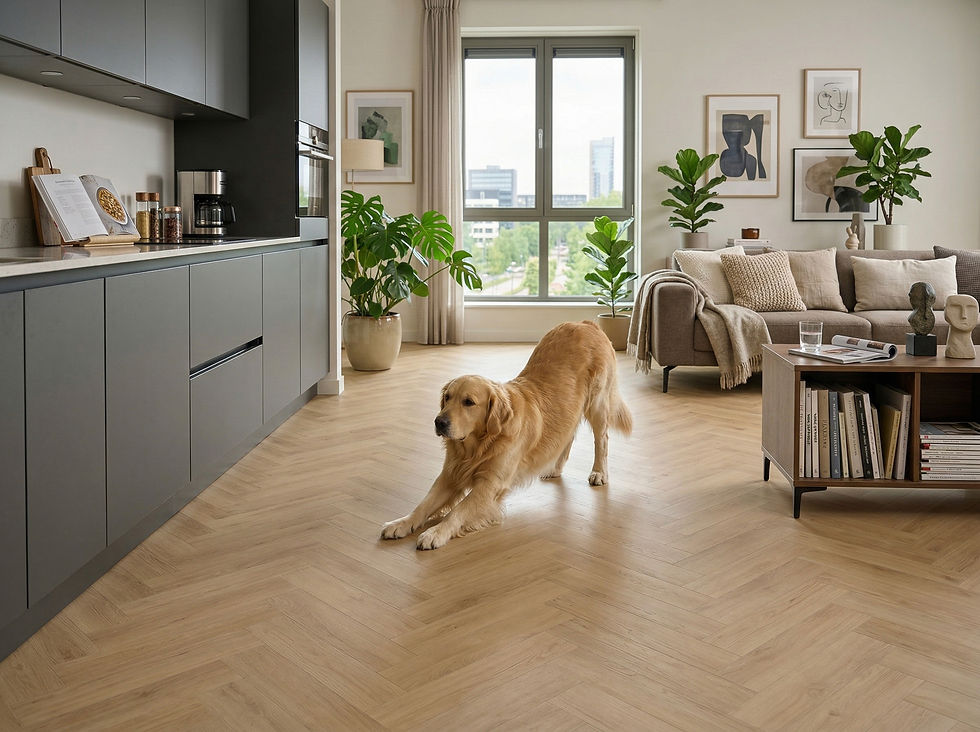
Trim pet nails regularly to reduce claw scratches.
Sweep often and use entry mats to keep grit off the floor – sand and salt act like sandpaper under shoes and toy wheels.
4. How to Prevent UV Fading
Even premium vinyl will fade under long-term direct sunlight, especially in Dutch homes with large south-facing windows or basement skylights.
Install curtains, blinds or window film on windows exposed to strong daylight. Close blinds during midday peak sun hours.
Rearrange rugs and furniture every few months to balance light exposure and avoid uneven color lines.
Do not place uninsulated radiators, heating pipes or heat appliances directly against the floor – localized high heat accelerates color loss.
Braag's UV-protected top layer scores above grade 6 on the ISO 105-B02 lightfastness test, but shade control is still necessary for long-term consistent color.
5. Line-Specific Maintenance Rules
Product Line Maintenance Comparison
Product Line | Water Exposure Limit | Wax / Polish Allowed | Key Special Notes |
Engineered Vinyl Click (LSPC) | Light damp mop only; no flooding | No | Excess water may seep into click joints and damage integrated IXPE underlay; lift furniture instead of sliding |
Engineered Vinyl Plank (LVP) | Light damp mop safe; avoid prolonged standing water | No | Avoid harsh acidic cleaners that degrade adhesive; do not use rubber or latex-backed mats |
Engineered Vinyl Tile (LVT) | Light damp mop safe; wipe standing water promptly | No | Extra regular sweeping recommended for textured stone-look surfaces |
Frequently Asked Questions (FAQ)
Q: What cleaning tools should I never use on Braag engineered vinyl floors?
A: Do not use vacuums with an active beater bar, steel wool, abrasive scrub pads, bleach, vinegar, wax or oil-based soap. All of these will scratch or damage the ceramic bead UV coating.
Q: Will sunlight cause Braag engineered vinyl to fade?
A: Yes. Prolonged direct UV exposure will gradually fade planks even with built-in UV resistance. Use blinds or curtains at sunny windows and rotate rugs to balance light exposure across the floor.
Q: How do I remove crayon and paint marks from engineered vinyl?
A: Apply a small amount of rubbing alcohol to a microfiber cloth and wipe gently, without heavy scrubbing. Follow with a clean damp mop to remove any leftover residue.
Q: Will pet claws permanently scratch Braag engineered vinyl flooring?
A: The 0.55mm commercial-grade ceramic bead wear layer resists light claw marks, but long untrimmed nails can create deep scratches. Regular nail trimming and entry mats greatly reduce visible damage.
Q: Do I need to wax or polish Braag engineered vinyl floors?
A: No. All Braag floors come with a factory-applied UV ceramic finish. Wax or polish will build up a hazy film, reduce underfloor heating efficiency and trap dirt more easily.
Q: Can I use lots of water to mop Engineered Vinyl Click (LSPC) floors?
A: No. Excess water can seep between click planks and damp the integrated IXPE underlay, causing minor swelling over long-term exposure. Always wring mops fully dry.
Final Verdict
The long-lasting beauty of Braag engineered vinyl flooring depends on two things: gentle, regular cleaning and proactive protection against scratches and UV fading.
Stick to daily sweeping, weekly light mopping, sun protection and furniture felt pads, and your floor will retain its original ultra-matte wood or stone finish for the full 30-year residential warranty. It is built to perform in every room of Dutch homes, from damp basements and busy entryways to playrooms and underfloor heated living spaces.