
How to Match Kitchen Cabinets with Vinyl Flooring: Colours, Textures and Design Ideas

Key Takeaway
Kitchen cabinets and flooring cover a large part of the room, so the way they work together has a major impact on the overall design. The best combination does not necessarily mean choosing matching colours. Instead, consider contrast, undertones, texture, lighting and the style you want to create. A balanced relationship between cabinets and flooring can make your kitchen feel warmer, brighter and more cohesive.
Introduction
When planning a kitchen renovation, it is easy to focus on cabinet doors, handles and worktops. But the flooring is just as important. It creates the visual foundation of the room and influences how every other material looks.
A beautiful cabinet colour may feel too strong beside the wrong floor, while a well-chosen flooring tone can bring the entire kitchen together.
So, how do you choose vinyl flooring that works with your kitchen cabinets?
The key is to think about the room as a whole. Consider the colours, textures, natural light and atmosphere you want to create before making your final decision.
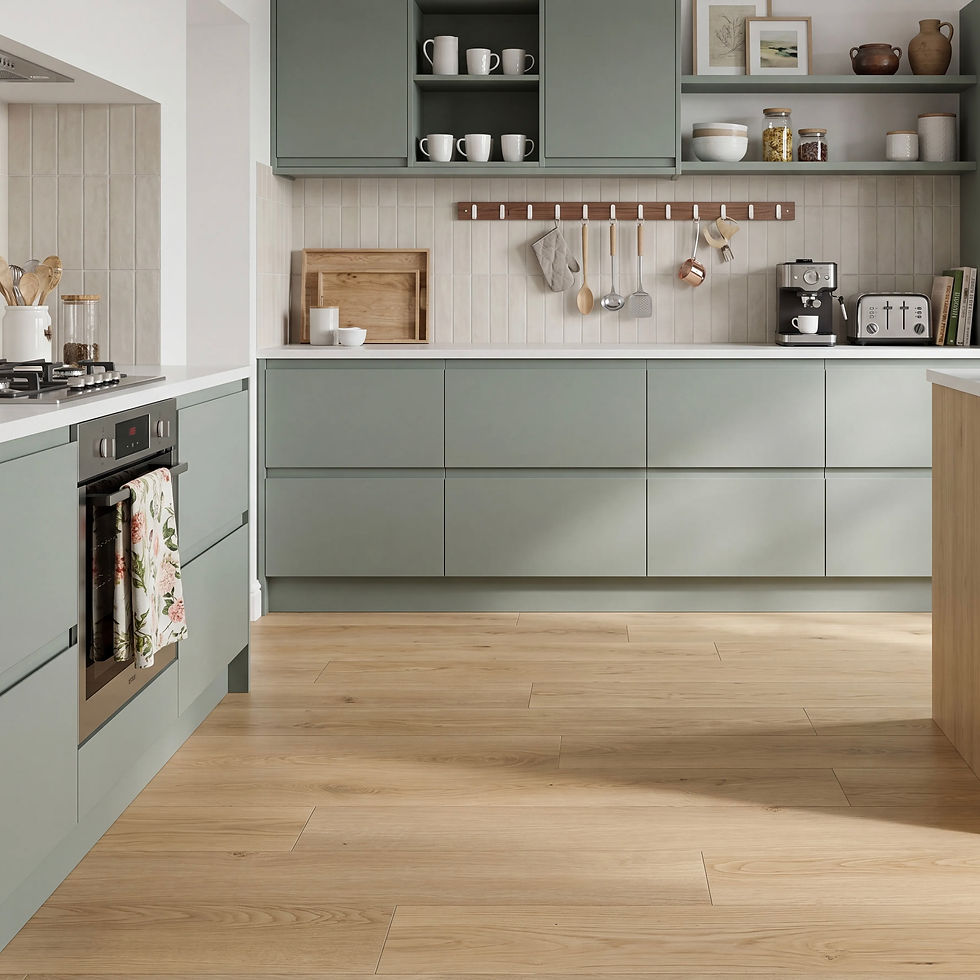
1. Decide Whether You Want Contrast or a Coordinated Look
One of the first decisions is whether your cabinets and flooring should look similar or create contrast.
For a coordinated look: Choose colours with similar undertones. For example, warm beige cabinets can work well with natural oak-look flooring. This creates a soft and welcoming atmosphere without making the room feel too busy.
For contrast: Pair light cabinets with a deeper floor, or darker cabinets with a lighter flooring tone. The difference helps each element stand out and can give the kitchen more visual definition.
Neither approach is automatically better. The right choice depends on the size of your kitchen, the amount of natural light and your personal style.
2. Match the Undertones, Not Just the Colours
Two surfaces can look similar in a product photograph but feel very different when placed together.
That is often because of their undertones.
Warm tones: Cream, beige and warm wood shades often work well together.
Cool tones: Grey cabinets can pair naturally with cooler grey or neutral flooring.
Neutral tones: White, greige and soft natural wood can create a flexible base for different kitchen styles.
Try to avoid combining several competing undertones without a clear design intention. For example, a strongly yellow-toned wood floor may feel disconnected beside cabinets with a cool blue-grey finish.
A useful tip is to compare cabinet and flooring samples side by side rather than relying only on online product photographs.
3. Consider the Style of Your Kitchen
Your kitchen style can help narrow down the flooring options.
Modern and Minimalist Kitchens
For a clean, contemporary kitchen, consider simple cabinet fronts, restrained colours and flooring with a subtle natural texture.
Light oak-look flooring can soften white or light-grey cabinets, while a deeper wood tone can create a more defined contrast.
Warm and Natural Kitchens
If your kitchen includes wood cabinets, warm neutral colours or natural materials, look for flooring that complements rather than competes with those finishes.
A balanced wood-look floor can help create a relaxed and connected atmosphere. If both the cabinets and flooring have strong wood patterns, consider choosing different shades or less prominent grain patterns to avoid visual overload.
Classic and Timeless Kitchens
For a more traditional look, consider combining cream or muted-colour cabinets with natural wood-inspired flooring.
Herringbone flooring can introduce a sense of pattern and detail, while a straightforward plank layout can create a quieter visual effect.
4. Think About the Worktop and Wall Colours Too
Cabinets and flooring are important, but they are not the only materials in your kitchen.
The worktop, backsplash and wall colour can change how the whole combination looks.
For example:
White cabinets, a light worktop and natural wood-look flooring can create a bright, understated kitchen.
Dark cabinets, a pale worktop and a mid-tone floor can balance depth with brightness.
Beige cabinets, a stone-look worktop and warm neutral flooring can create a soft, natural palette.
Try to choose a main colour direction first, then use the other surfaces to support it. You do not need every material to match exactly. A little variation often makes the room feel more natural.
5. Check Your Kitchen Lighting Before Choosing
Lighting can make the same flooring sample look different at different times of day.
A kitchen with large windows may show more detail and variation in the floor's colour. A darker kitchen may make certain finishes appear deeper or cooler.
Before making a final decision:
Place your flooring sample next to the cabinet sample.
Check them in natural daylight.
Look at them again under your kitchen's artificial lighting.
Compare them with the worktop and wall colour.
View the combination from different parts of the room.
If possible, look at larger samples. A small sample may not show the full pattern or variation of a floor.
6. Choose a Flooring Pattern That Complements the Cabinets
Colour is only one part of the decision. The flooring pattern also affects the overall appearance.
Straight plank flooring can create a calm, continuous look and works with many cabinet styles.
Herringbone flooring introduces more movement and can become a decorative feature in a kitchen with simple cabinet fronts.
Stone-inspired designs can offer a different visual direction if you want to move away from a traditional wood look.
Braag offers engineered vinyl in plank, tile and herringbone formats, giving homeowners different visual options to consider when planning a kitchen interior. Explore the available designs and choose a pattern that complements the rest of your materials.
7. Avoid Making Every Surface Compete for Attention
A common design mistake is choosing too many strong patterns or contrasting finishes at the same time.
For example, highly detailed cabinet fronts, a strongly patterned worktop and a prominent flooring design may make a kitchen feel visually crowded.
Instead, choose one or two elements to stand out and let the others provide balance.
If your cabinets have a distinctive finish, a quieter floor may work better. If your cabinets are simple, a more noticeable flooring pattern can add character.
The goal is not to make every surface look identical. It is to create a kitchen where all the elements feel connected.
Frequently Asked Questions
Should kitchen flooring be lighter or darker than cabinets?
There is no fixed rule. Lighter flooring can help create an open and bright appearance, while darker flooring can add contrast and definition. Consider your kitchen's lighting, size and overall colour palette.
Can wood-look vinyl flooring be paired with wood kitchen cabinets?
Yes. The key is to pay attention to the shade and grain pattern. Choose complementary tones rather than trying to make the two wood finishes look exactly identical.
What colour flooring goes with white kitchen cabinets?
White cabinets are versatile and can work with light oak, warm beige, neutral grey or darker wood-look flooring. Your choice depends on whether you prefer a bright, warm or more contrasting kitchen.
Is herringbone flooring suitable for a modern kitchen?
Herringbone can work in both modern and traditional kitchens. Its repeating pattern adds visual interest, so it is worth considering how it will interact with cabinet details, worktops and the size of the room.
Should I choose cabinets or flooring first?
If you are renovating the whole kitchen, it helps to compare both materials early in the planning process. You do not necessarily need to finalise them at the same time, but choosing samples together makes it easier to create a coordinated result.
Final Thoughts
A well-designed kitchen is not about making every surface match. It is about finding the right balance between colours, materials and patterns.
Start with the atmosphere you want to create, compare cabinet and flooring samples in your own lighting, and consider how the worktop and walls complete the look.
With a little planning, your kitchen flooring can do more than finish the room. It can help bring the entire design together.


